Singapore is a city that moves fast. Between long office hours, packed MRT rides, and the constant hum of deadlines, it is little surprise that stress-related health conditions are on the rise. Yet tucked inside fitness studios across the island, a growing number of Singaporeans are discovering that one of the most effective ways to reset the body is not through rest, but through sweat and rhythm. The surge in popularity of indoor cycling Singapore has far more to do with biology than trend-chasing. When you clip in and start pedalling to a driving beat, your body begins a remarkable hormonal cascade that can improve your mood, metabolism, and long-term health in ways that go well beyond calorie burn.
This article explores the science behind what happens inside your body during and after an indoor cycling session, and why the hormonal responses triggered by this form of exercise make it particularly well-suited to the Singaporean lifestyle.
The Stress Hormone Problem in Modern Singapore
Cortisol is your body’s primary stress hormone. It is produced by the adrenal glands and is essential for regulating blood sugar, inflammation, and your sleep-wake cycle. The problem is that modern urban life keeps cortisol elevated almost permanently. Chronic stress from work pressure, financial concerns, sleep debt, and even the daily commute can keep cortisol levels high for extended periods. Over time, this leads to weight gain particularly around the abdomen, disrupted sleep, weakened immunity, and increased risk of cardiovascular disease.
Exercise is one of the most clinically validated ways to manage cortisol. However, not all exercise achieves this equally. High-intensity, sustained cardiovascular exercise such as indoor cycling creates what researchers call a hormetic stress response. This means the exercise causes a temporary spike in cortisol during the session, but once the session ends and recovery begins, the body actually rebalances to lower cortisol levels overall. Regular indoor cycling trains your adrenal system to become more efficient, meaning you produce less cortisol in response to everyday stressors over time.
Endorphins: The Natural Rush You Cannot Buy
If you have ever finished an RPM class and felt an almost inexplicable wave of positivity washing over you, you have experienced an endorphin release firsthand. Endorphins are neuropeptides produced in the brain’s hypothalamus and pituitary gland, and they are your body’s built-in pain relief and pleasure system. During sustained aerobic exercise at moderate to high intensity, exactly the kind of intensity you hit in a properly structured cycling session, the brain releases endorphins in significant quantities.
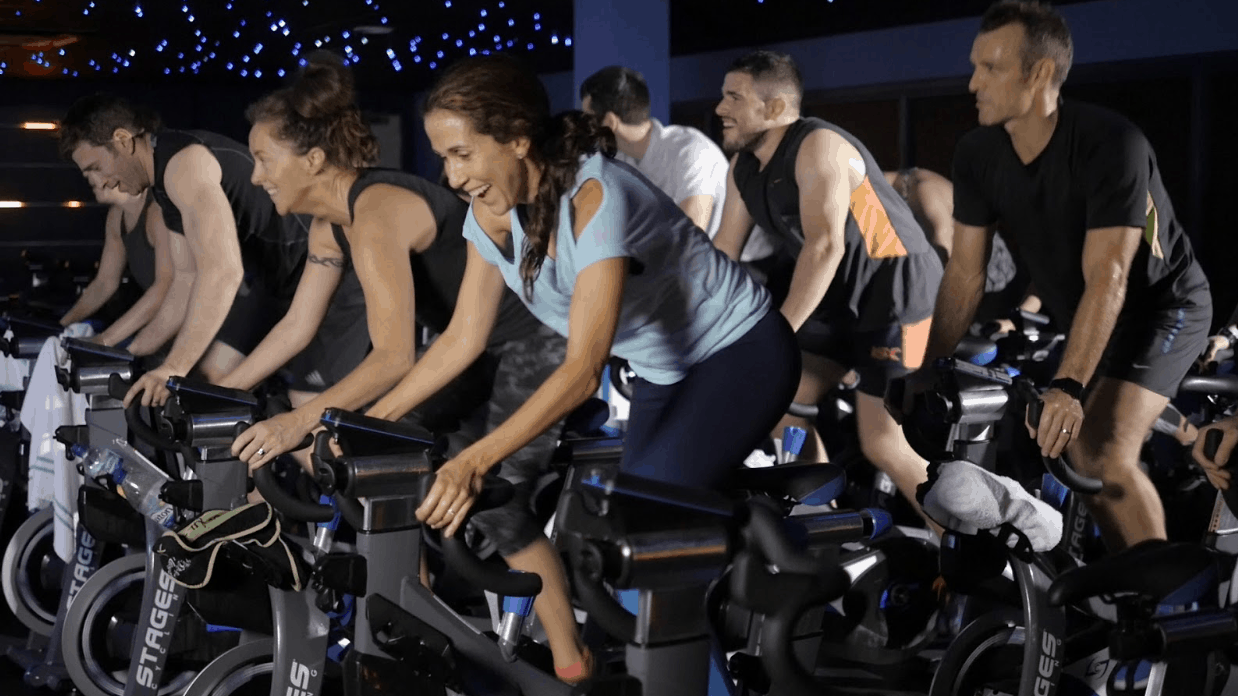
What makes indoor cycling particularly effective at triggering endorphin release is the combination of rhythmic movement, music, and group energy. Research published in the journal Frontiers in Psychology found that synchronised movement to music significantly amplifies endorphin release compared to exercise performed in silence. This is why finishing an RPM class feels so different from finishing a solo treadmill run. The music, the instructor’s cues, the shared effort with others in the room, all of these elements compound the biological reward.
Dopamine, Serotonin and the Mood Reset
Beyond endorphins, indoor cycling also triggers the release of dopamine and serotonin, two neurotransmitters that play central roles in motivation, focus, and emotional stability. Dopamine is associated with reward-driven behaviour. When you push through a tough climb interval and feel that surge of accomplishment, dopamine is the chemical responsible. Regular dopamine reinforcement through exercise creates a positive feedback loop that makes you want to return to training again and again.
Serotonin, often called the wellbeing chemical, is produced in greater quantities when you exercise outdoors in sunlight. However, because Singapore’s heat and humidity make extended outdoor exercise uncomfortable for many people, indoor cycling offers an effective alternative stimulus for serotonin production. The cardiovascular intensity achieved during a cycling session is sufficient to stimulate serotonin synthesis without requiring sunlight exposure.
Why Singapore’s Climate Makes This Especially Relevant
Singapore’s year-round heat and humidity create a genuine barrier to sustained outdoor cardio for a significant portion of the population. Elderly residents, those with respiratory sensitivities, and individuals who are new to fitness often find that exercising outdoors feels punishing rather than restorative. Indoor cycling removes this barrier entirely. The controlled, air-conditioned environment allows participants to sustain effort at levels needed to trigger meaningful hormonal responses without the physiological strain of heat and dehydration.
Insulin Sensitivity and Metabolic Hormones
One of the less discussed but highly significant hormonal benefits of regular indoor cycling is its effect on insulin sensitivity. Insulin is the hormone responsible for regulating blood glucose. When cells become resistant to insulin, blood sugar remains elevated, increasing the risk of type 2 diabetes, a condition that is disproportionately prevalent in Singapore compared to global averages.
Aerobic exercise, and particularly high-intensity interval formats like RPM cycling, has been shown in multiple clinical studies to significantly improve insulin sensitivity. During a cycling session, working muscles absorb glucose directly from the bloodstream without requiring insulin, effectively lowering blood sugar in real time. Over weeks and months of consistent training, this translates to lasting improvements in metabolic health and a reduced risk of diabetes and metabolic syndrome.
Growth Hormone and Recovery
Human growth hormone (HGH) is not just for athletes chasing performance gains. It plays an essential role in tissue repair, fat metabolism, bone density, and immune function for all adults. HGH secretion declines naturally with age, contributing to the gradual changes in body composition and recovery speed that many people associate with getting older. High-intensity exercise is one of the most potent natural stimulators of HGH production.
Indoor cycling, particularly when structured with interval-based surges of effort, creates the metabolic conditions that most strongly stimulate HGH release. Studies have shown that high-intensity cycling intervals can increase circulating HGH levels by up to 300 percent compared to resting values. This is why regular cyclists often report feeling physically younger over time. The hormonal environment created by consistent cycling training actively supports tissue regeneration and lean muscle maintenance.
Adrenaline, Noradrenaline and Your Cardiovascular System
Every time you push hard in a cycling session, your adrenal glands release adrenaline and noradrenaline. These catecholamines increase your heart rate, dilate blood vessels in the working muscles, and sharpen mental focus. While they are often associated with the fight-or-flight stress response, when released in the controlled context of exercise, their effects are overwhelmingly positive.
Regular adrenaline surges through exercise train the cardiovascular system to handle high-demand situations more efficiently. The heart becomes stronger, resting heart rate decreases, and blood pressure regulation improves. For Singaporeans at risk of hypertension, a condition affecting roughly one in four adults here, this regular cardiovascular conditioning can have real, measurable health benefits without requiring medication.
How Often Should You Cycle for Hormonal Benefits
The hormonal benefits of indoor cycling are cumulative and dose-dependent. A single session will produce an immediate mood boost through endorphin and dopamine release. But the deeper metabolic benefits, improved insulin sensitivity, lasting cortisol reduction, and enhanced HGH production, develop over weeks and months of consistent training.
Most exercise scientists recommend a minimum of three sessions per week to achieve meaningful long-term hormonal adaptation. This aligns with the class scheduling structure at most True Fitness Singapore, where multiple RPM sessions are available throughout the week at various times to accommodate different work schedules.
The ideal progression for beginners is to start with two sessions per week and allow the body two to three weeks to adapt before increasing to three or more. Overtraining without adequate recovery can paradoxically raise cortisol levels rather than lowering them, so rest and nutrition are equally important components of the overall programme.
FAQ
Q. Can indoor cycling help with hormonal imbalances caused by conditions like PCOS?
A. Yes, there is meaningful evidence supporting this. Polycystic ovary syndrome (PCOS) is closely linked to insulin resistance and elevated androgens. Regular aerobic exercise, including cycling, has been shown to reduce insulin resistance, lower androgen levels, and improve menstrual regularity in women with PCOS. It is advisable to consult a healthcare provider before beginning any exercise programme specifically for PCOS management.
Q. How long does the post-exercise endorphin effect last after an indoor cycling session?
A. The immediate endorphin high typically lasts between one and three hours after exercise. However, the broader mood-stabilising effects from serotonin and dopamine regulation can persist for several hours or even into the following day, particularly with consistent training over time.
Q. Is it normal to feel emotionally sensitive or tearful after a very intense cycling class?
A. This is more common than most people realise and is directly tied to the hormonal shift that occurs post-exercise. The combination of endorphin release, adrenaline coming down, and the emotional catharsis of sustained physical effort can trigger unexpected emotional responses. It is a sign that your body has worked hard and is processing the neurochemical shift, not a cause for concern.
Q. Does exercising at night affect sleep hormones if I attend a late indoor cycling class?
A. High-intensity exercise within two hours of bedtime can temporarily elevate cortisol and adrenaline levels, which may delay sleep onset for some individuals. If you are sensitive to this, choose morning or early evening classes and allow adequate wind-down time before bed. Many regular cyclists find their sleep quality improves significantly over time as resting cortisol levels decrease.
Q. Can men benefit hormonally from indoor cycling in the same way women do?
A. Absolutely. While the specific hormonal profiles differ between men and women, both benefit equally from the cortisol regulation, endorphin release, HGH stimulation, and insulin sensitivity improvements that indoor cycling provides. Men additionally benefit from the testosterone-supporting effects of high-intensity cardiovascular training.